At Raymond James Stadium, you might hear the person next to you just fine between plays. Then the crowd gets loud, and suddenly you are missing words and trying to figure out the rest from context.
That is why hearing in a quiet booth and hearing in real life can feel so different. Tampa gives you plenty of examples, from a quiet morning on the lanai to dinner in a busy Hyde Park restaurant where music, dishes and other conversations are all happening at once.

A soundproof booth takes all of that away so your local audiologist can see how softly you hear when nothing else is getting in the way. That is useful, but it is only one part of the story. Most conversations happen with some kind of background noise mixed in.

Some people do well on a standard hearing test and still have a hard time following speech in restaurants, group settings or other busy places. That is why speech-in-noise testing matters. It puts speech and background sound together so your audiologist can see what happens when listening gets more complicated.

Why Hearing Feels So Different in Quiet and Noise

Following one person in a quiet room does not ask much from your hearing system. There is less sound competing for your attention, so speech stands out more easily. Your brain does not have to work as hard to separate one voice from everything else around it.

That changes quickly in a busy restaurant, store or family gathering. Several sounds reach you at once, and your brain has to sort through music, dishes, footsteps and other conversations to find the voice you want.

That extra effort is why noisy places can feel tiring even when hearing in quiet seems completely fine.

What Happens During a Standard Hearing Assessment

A hearing assessment usually starts with a conversation about what you have been noticing. Your audiologist might ask where listening feels easy, where it gets harder and whether certain voices or situations give you more trouble than others.

That context helps connect the test results to the problems you are actually experiencing.

During testing, you will typically wear headphones or insert earphones and respond when you hear different tones. Your audiologist changes the pitch and volume to find the softest sounds you can hear across a range of frequencies. Other parts of the assessment use spoken words to see how clearly you understand speech when it is loud enough to hear.

Some evaluations also include listening tasks with background noise mixed in. That adds another layer of information because hearing a tone in silence is different from following a conversation in a crowded room.

Why Hearing Tests Start in a Quiet Booth

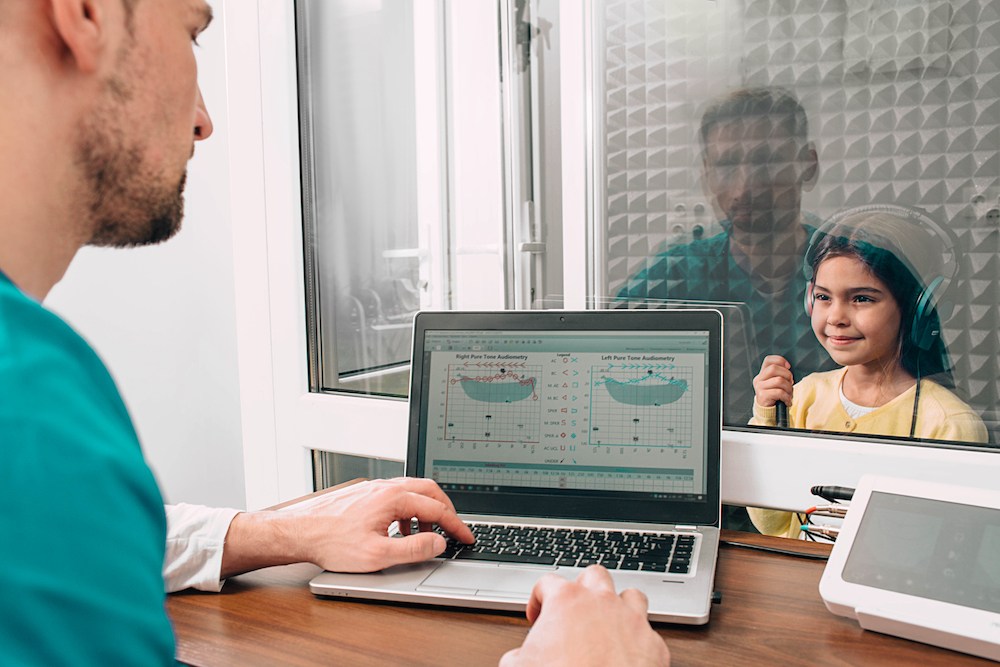
A sound-treated booth gives your audiologist one thing the outside world cannot: control. Traffic, hallway noise, air conditioning and nearby conversations are reduced so they do not interfere with the softest sounds being tested.

That quiet setting helps establish your hearing thresholds at different pitches. In other words, it shows how soft a sound can get before you stop hearing it. Because the conditions stay consistent, those results can also be compared with future hearing tests.

The booth is not supposed to imitate a restaurant, office or family gathering. It is there to create a reliable baseline first. Once that baseline is established, your audiologist can look at how your hearing holds up when listening becomes more complicated.

What Speech-in-Noise Testing Can Show

Two people can have very similar hearing thresholds and still have completely different experiences in a noisy room. That is where speech-in-noise testing becomes useful. Instead of listening to words in isolation, you hear speech while other sounds are playing at the same time.

The test looks at how well you can pick out the words you want while background sound competes for your attention. That can help explain why someone hears perfectly well during a quiet conversation but starts missing pieces once a room gets busy.

It also gives your audiologist information that pure-tone testing cannot provide on its own. If restaurants, meetings or family gatherings are your biggest complaint, this kind of testing helps show how much background noise affects your speech understanding.

Sounds You Might Hear During a Hearing Test

You will hear more than one kind of sound during a hearing assessment because each one checks something different. Some parts focus on how softly you can hear, while others look at how clearly you understand speech.

Two common examples include:

  • Pure tones: Beeps at different pitches help find the softest sounds you can hear across a range of frequencies.
  • Spoken words: Words presented at controlled volume levels show how accurately you recognize speech when it is loud enough to hear.

Connecting Hearing Test Results to Real-Life Listening

A hearing test happens in a controlled setting, but your day rarely does. Restaurants, waterfront patios and family gatherings come with voices overlapping, dishes clattering, music playing and people moving around.

Even someone with typical hearing can lose pieces of conversation when enough sound piles up at once.

That is why your audiologist looks beyond whether you can hear soft tones in a quiet booth. If you struggle most when several sounds are happening together, testing can help show what changes once background noise enters the mix.

Around Tampa Bay, that might mean dealing with wind, nearby conversations and boat noise during an outdoor meal.

Those details help explain why someone can hear well in one setting and feel lost in another. The issue is not always how loud speech is. Sometimes the harder part is separating the voice you want from everything happening around it.

Turning Test Results Into Hearing Aid Settings That Fit Your Routine

Test results become more useful when they are tied to the places where you actually spend your time. Quiet testing shows how softly you hear, while speech testing gives your audiologist more information about how clearly you understand words.

Results from noisier conditions can reveal where that understanding starts to break down.

That information can guide how hearing aids are programmed. Someone who spends a lot of time in restaurants, meetings or social gatherings might benefit from settings that place more emphasis on speech in busy environments. Another person might care more about softer conversations at home.

Programming is not about turning everything up equally. Your audiologist can adjust different parts of the sound based on what testing shows and where you are having trouble. That makes the technology more useful than relying on a one-size-fits-all setting.

How to Prepare for an Accurate Hearing Test

You do not need to do much before a hearing test, but a little preparation can make the appointment more useful. The biggest help is arriving with a good sense of where hearing has been giving you trouble.

Before your visit:

  • Give your ears a break from unusually loud noise for about 24 hours
  • Make a note of situations where speech has been harder to follow
  • Bring information about medications or hearing concerns your audiologist should know about
  • Wear your current hearing aids if you already use them

Questions Worth Asking When You Review Your Hearing Test

Hearing test results come with a lot of numbers, lines and unfamiliar terms, so do not feel like you have to understand everything the first time you see them. The most useful questions are the ones that connect those results back to situations you recognize.

Ask how your hearing in quiet compares with your performance when background noise is added. If certain pitches or speech sounds are harder for you, find out how that might show up in conversation. You can also ask what the results explain about places where you already know listening feels difficult.

If hearing aids are part of the discussion, ask how the settings would address those specific problems rather than just how powerful the devices are. And if noisy restaurants or group conversations remain difficult, ask what other adjustments or listening strategies could help. Those answers make the test results feel a lot more relevant than simply looking at a chart.

Understanding Your Hearing Test Results and Next Steps

If conversations feel easier in some places than others, that difference might say more about your hearing than a quiet room ever could.

Tampa Audiology Solutions in Tampa, FL can test how you handle both quiet and noisy settings, not just one or the other. That gives you a clearer picture of what’s actually going on and what might help.

Give us a call at (656) 333-6686 and let’s find out how your ears perform where it actually matters, whether that’s a quiet office or a loud game-day crowd.